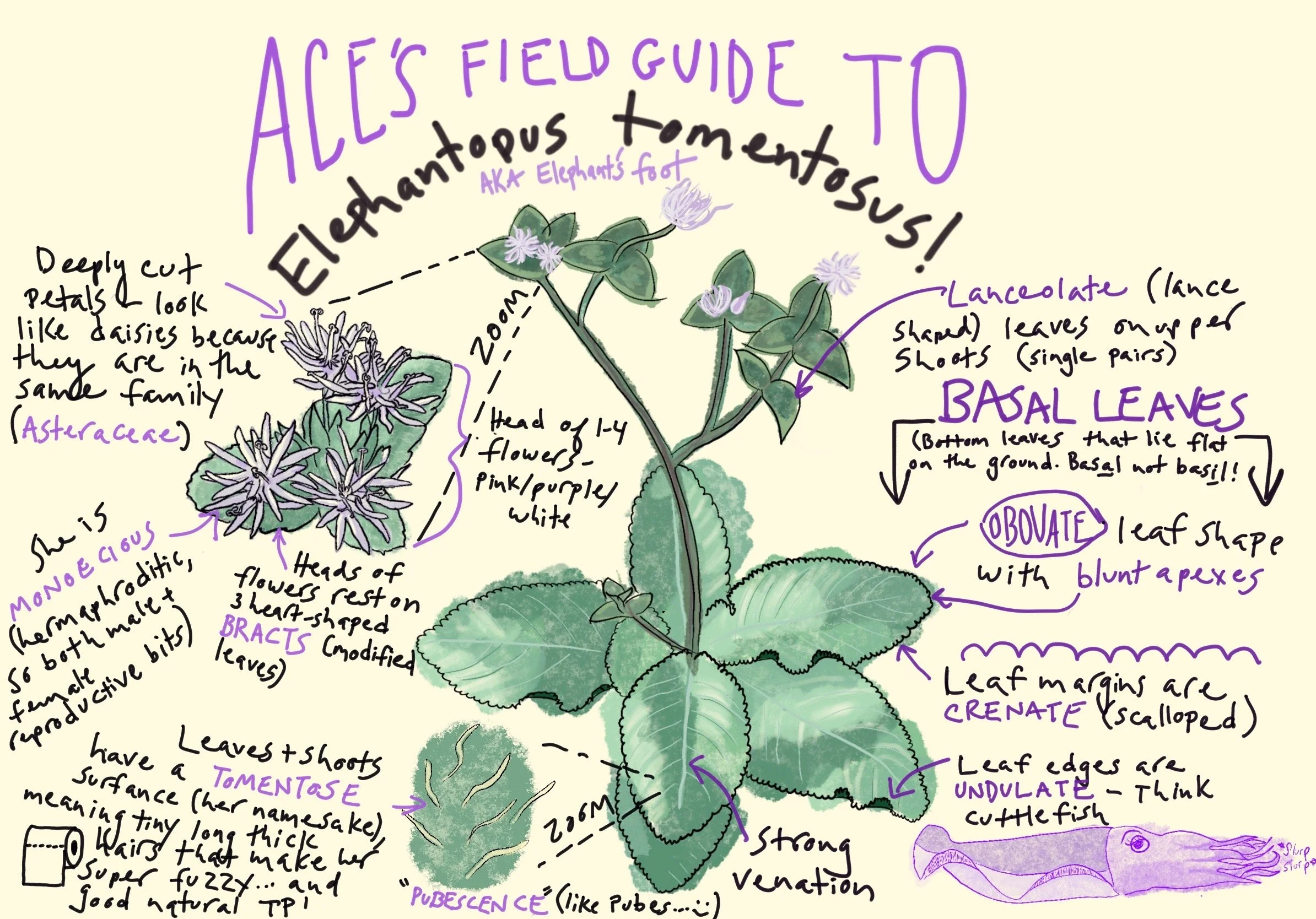
Elephantopus Tomentosis: Leafy Elephant’s Foot
Phytolacca Americana: Pokeberry
Preserving and celebrating native biodiversity is one of the things I care most about. When I took a “Local Flora” class with Dr. Alan Weekly for my Biology major during my last semester of undergrad at UNC Chapel Hill, I started my lifetime odyssey of appreciation for plants. When I worked in construction with Durham Habitat for Humanity as an Americorps member, I checked on the plants every day that grew wild in the freshly graded clay of the work sites, and introduced volunteers to them who were interested, recommending the use of citizen science species identification apps like iNaturalist.
While iNaturalist is excellent for identifying species, it does not immediate access to bounty of stories that each local plant, animal, or fungus carries. In the spirit of what I thought should pop up on iNaturalist when someone identifies a plant, I made short videos each telling stories of a local native plant, including traditional value to indigenous and non-indigenous cultural communities, their ecological connections to other species, and some of the interesting biomedical research supporting their functional properties for people. One may easily dismiss these “trash plants” when they literally grow next to trash cans, but, through the videos I have made and shared on TikTok, I am happy to have helped contribute to my audience’s appreciation for the majesty of these species.
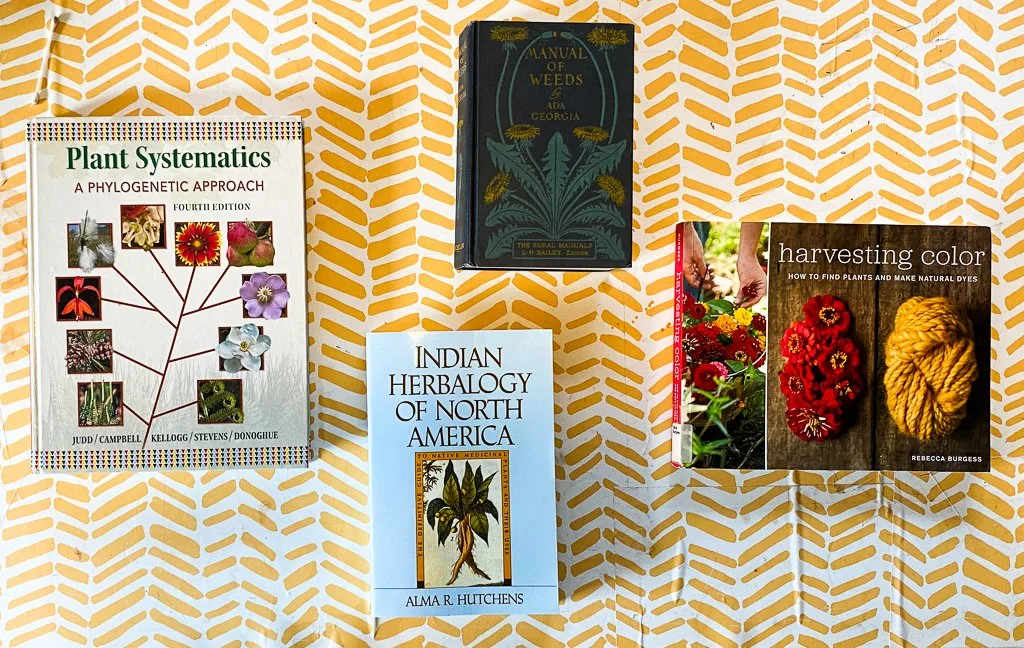
Process for Making Trash Plants Videos
I first consult books before hitting the internet. I do this for my personal projects because I am doing it for joy, not efficiency, and I love books. My tried-and-trues are pictured and cited below. Full citations here. Then, I search PubMed for any biomedical research available about the plant’s properties. I am on PubMed every day for work, so it’s reflexive but feels subversive… using PubMed outside of work is one of my most shocking secrets. Also, yes, shoutout to UNC for supplying my access to these articles. Finally, I throw on the swim trunks and surf the good ol’ internet. I double-check my sources, I promise.
Script & Storyboard
I make a Google Doc, as I do for everything. I type up a story including all of the facts I have collected from my research. I usually save this first draft for a blog post, which I had on my old website (RIP). I time how long it takes to read the whole thing aloud, and then pare down the narration until it is a reasonable length for an Instagram Reel (also RIP, as I am no longer on Instagram). I continue to make a storyboard in a traditional video script format that includes shots and audio side-by-side. I learned this method from making news packages with the Carolina Week, UNC CH’s TV news program. I also sometimes draw out sequences, like this one.
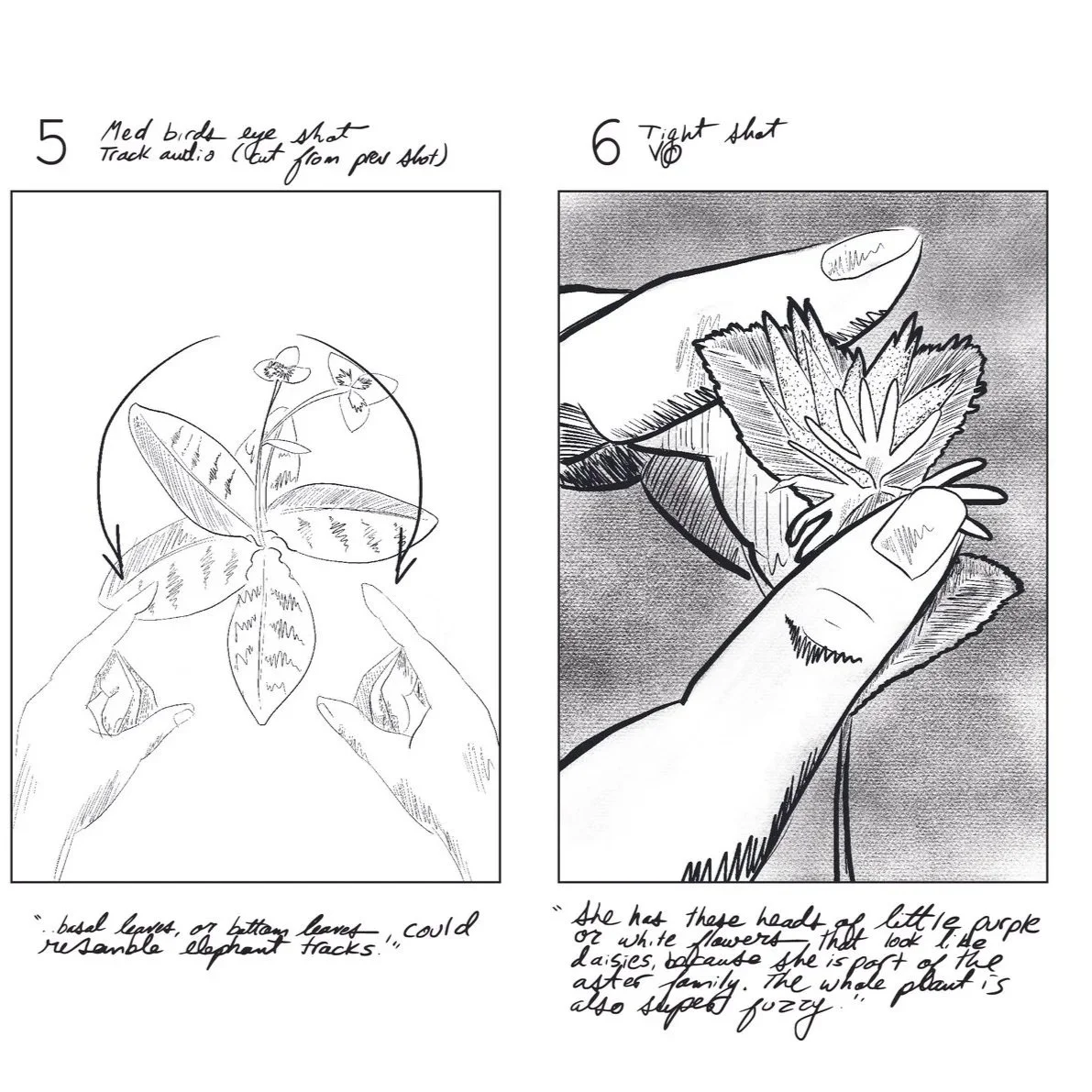
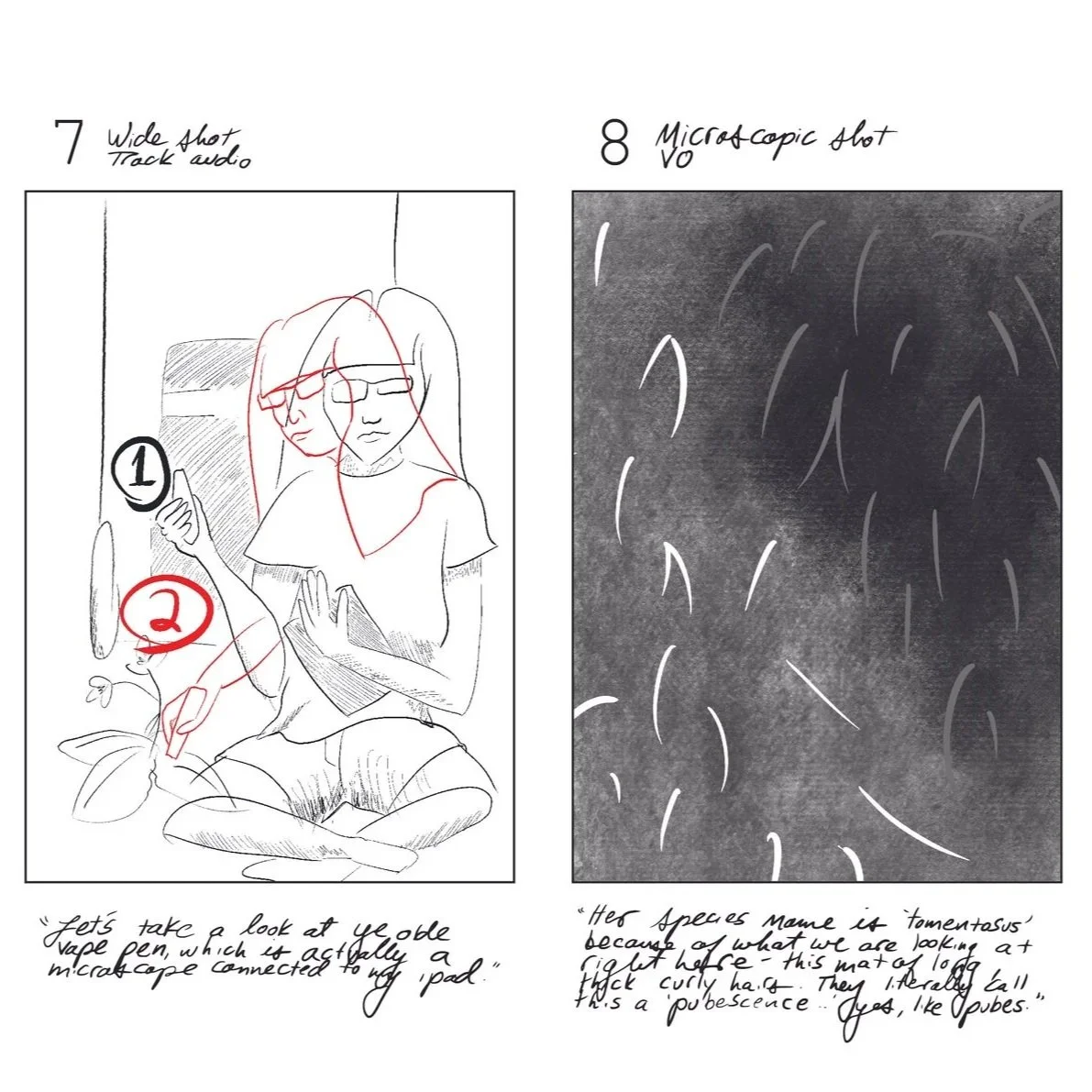
I go on location (in my yard or across the street) with my camera setup and props. All I have to do now is follow my shot list and answer questions from confused neighbors. I then upload my files into premiere pro and edit in accordance to my script. I include subtitles for accessibility.
Finally, I chose the time at which I post, topic tags, and location tags strategically to meet my audience on Instagram. My Instagram is no more, but I also published them on TikTok, where I got far more views than I expected.
I also wrote blogs that accompanied these posts, which have sadly been lost. However, I do still have the graphics from my blog post about Leafy Elephant’s Foot, which I made in Procreate.
Shoot, Post, and Blog.